Loading...
Serving Lynwood, CA and surrounding areas. (424) 307-8116
Your Lynwood building loses cooling every day through under-insulated ceilings and walls. We install commercial insulation that lowers energy costs and keeps your space comfortable.
Commercial insulation in Lynwood slows heat movement through roofs, ceilings, and walls so your HVAC system works less, and most small-to-mid-size commercial jobs are completed in one to three days with minimal disruption to your operations.
Lynwood is in the Los Angeles Basin, where air conditioning runs most of the year and urban density pushes temperatures even higher than regional climate averages suggest. A significant share of Lynwood's commercial buildings were constructed before 1980, when insulation standards were far lower than they are today. If your building is in that age range and has never had an insulation assessment, ongoing energy waste is almost certain. California's Title 24 energy code sets stricter-than-national insulation requirements for commercial buildings, and any permitted renovation work must meet those standards - meaning an experienced contractor handles compliance for you. For business properties with crawl spaces, crawl space vapor barrier installation pairs well with insulation to control moisture from below.
The Department of Energy estimates that properly insulating and air-sealing a commercial building can reduce heating and cooling costs by 10 to 20 percent or more. The DOE Commercial Buildings program has resources on energy efficiency upgrades for business owners.
If your electricity costs have been rising year after year with no change in operations or equipment, poor insulation is often the culprit. In Lynwood's climate, where air conditioning runs most of the year, an under-insulated roof or wall forces your HVAC to run almost continuously - and that shows directly on your bill.
Walk through your space on a warm afternoon. If one side of the building or the area near the roof is noticeably hotter than the rest, heat is getting in where it should not. In older Lynwood commercial buildings, this usually points to missing or degraded insulation in the ceiling or upper walls.
If your air conditioning runs constantly without making the space feel comfortable, the problem may not be the equipment - it may be conditioned air escaping as fast as the system produces it. Gaps in insulation or air sealing let cool air out and hot air in, making even a well-maintained HVAC system appear to be failing.
Many Lynwood commercial buildings were constructed in the 1960s through 1980s, when insulation standards were far lower than today. If your building has never had an insulation assessment, there is a good chance it is operating well below current standards - and the energy waste is ongoing and invisible until someone looks.
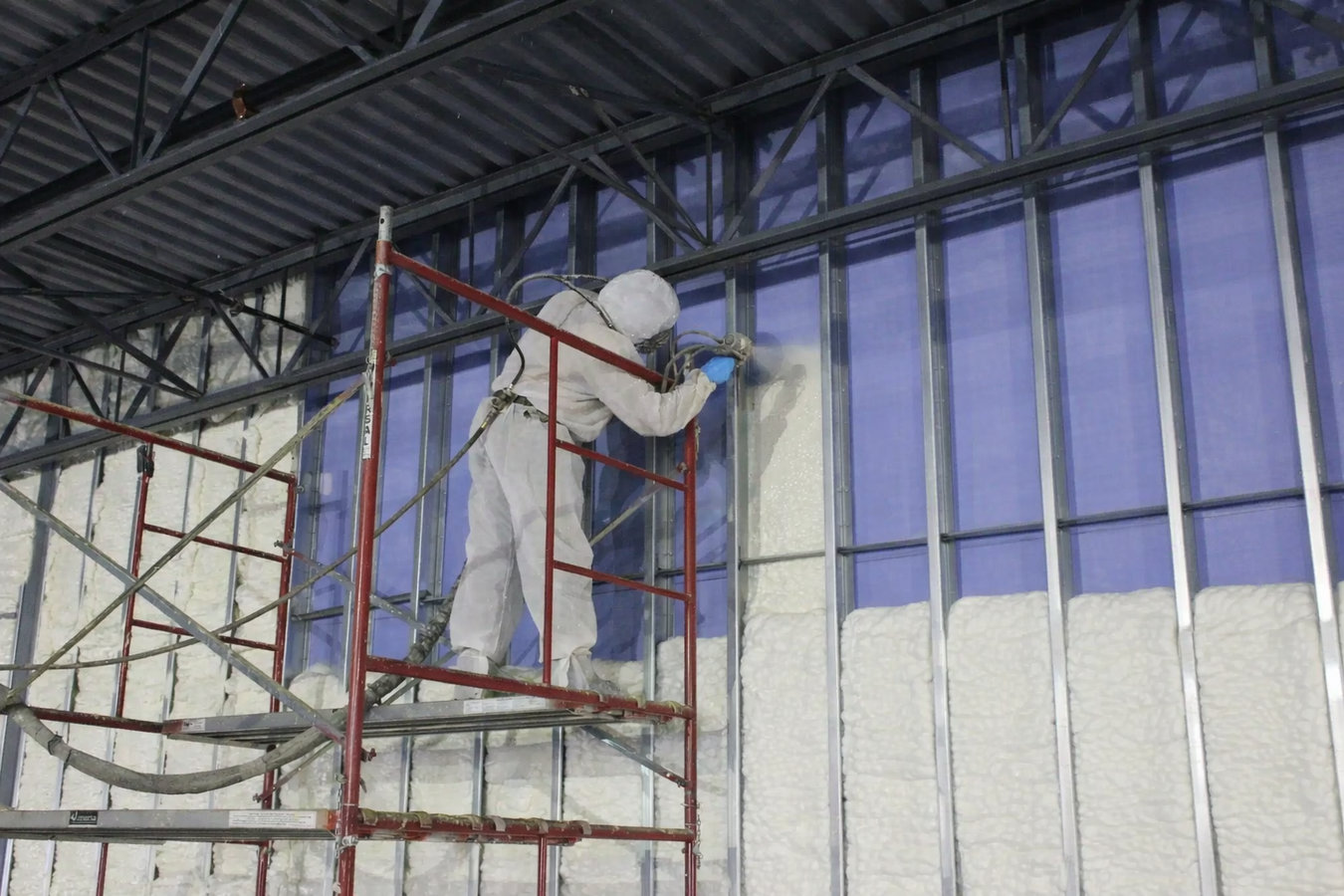
The right insulation type depends on where it is going and what your building needs. For most commercial attic spaces and existing ceilings, blown-in loose fill is the fastest path to full coverage without opening walls or disturbing finishes. For open-wall renovations or new construction, batt insulation installed between framing members before drywall goes up is efficient and cost-effective. When maximum performance per inch is needed - or when you need insulation and an air barrier in one step - spray foam is the right tool. We assess each area of your building separately and recommend the method that gives you the best outcome for that specific location.
All permitted commercial work in Lynwood must comply with California's Title 24 energy code, and we build that compliance into every proposal. For business properties that also need moisture control below grade, pairing insulation with crawl space vapor barrier installation addresses the problem from both directions. Businesses that use spray foam insulation throughout get the added benefit of a continuous air seal that standard batt work alone cannot achieve.
Best for new commercial construction or open-wall renovations where framing is accessible before drywall.
Best for adding insulation to existing ceilings, attic spaces, and finished cavities without opening walls.
Best for sealing irregular cavities, achieving maximum R-value per inch, or combining insulation with air barrier in one step.
Lynwood is a dense urban city in the Los Angeles Basin, and that density contributes to an urban heat island effect where local temperatures can run several degrees higher than surrounding suburban areas. For commercial buildings here, that means your cooling load is already elevated before you factor in poor insulation. Roof and ceiling insulation delivers the fastest payback in this climate because heat radiates down through an under-insulated overhead plane constantly during Lynwood's long summer season. Business owners in Inglewood and Hawthorne face the same conditions and benefit from the same upgrades.
California's Title 24 building energy code is among the most demanding in the country for commercial construction and renovation. Any permitted insulation project in Lynwood must meet these requirements, which is actually an advantage - buildings that comply with Title 24 are genuinely more efficient, not just paper-compliant. The EPA's urban heat island research explains why dense cities like Lynwood see higher cooling costs than regional climate data alone would predict.
When you reach out, expect a brief conversation about your building - its size, age, and what is prompting the call. Most contractors schedule an on-site visit rather than quoting over the phone because your building's actual condition matters more than its square footage alone.
A contractor walks your building and checks the areas most likely to be losing energy - the roof, ceiling, walls, and mechanical spaces. They may use a thermal imaging tool to spot heat loss that is not visible to the eye. You receive a written estimate before any work is scheduled.
For commercial work in Lynwood that requires a permit, your contractor submits the application to the appropriate county office. This step typically adds a few business days to the start. Your contractor handles the paperwork - you just need to know it is part of the process and budget the time.
Most commercial crews work efficiently with minimal disruption - work happens in attic spaces, wall cavities, or above drop ceilings, not in your active workspace. After completion, the contractor walks you through what was installed and provides documentation you keep on file.
No obligation, no pressure. We reply within one business day and come to you.
(424) 307-8116Our crews work commercial buildings across Lynwood and know how Title 24 applies to walls, roofs, and mechanical spaces. We coordinate permits, build the energy code into the proposal, and document the completed project end to end.
California's commercial energy code sets stricter insulation standards than most states, and any permitted project in Lynwood must meet them. We know what Title 24 requires for your building type and climate zone and build compliance into the scope from the start - so you do not get a surprise at inspection.
A significant share of Lynwood's commercial stock was built before 1980. We assess older buildings honestly - flagging materials that need attention before work starts - so there are no mid-job surprises and no shortcuts that come back later.
We handle the permit application and inspection scheduling on your behalf. You get a fully documented project with a county inspection sign-off - the paper trail that protects you when you refinance, sell, or expand the property.
Choosing Lynwood Insulation means getting an experienced contractor who handles permits, knows California's energy code, and delivers a documented project from first visit to final inspection. That paper trail protects your building investment long after the work is done.
Add moisture control below your commercial building to protect insulation and prevent long-term damage from ground vapor.
Learn MoreFor commercial spaces needing the highest R-value per inch or a combined insulation and air barrier, spray foam is worth considering.
Learn MoreLynwood summers are long and the energy waste is ongoing - the sooner your building is insulated, the sooner your monthly costs come down.