Loading...
Serving Lynwood, CA and surrounding areas. (424) 307-8116
Moisture rising from bare soil gets into your floors, feeds mold, and worsens indoor air quality. Professional vapor barrier installation cuts off that moisture at the source - no disruption to your home, lasting results.
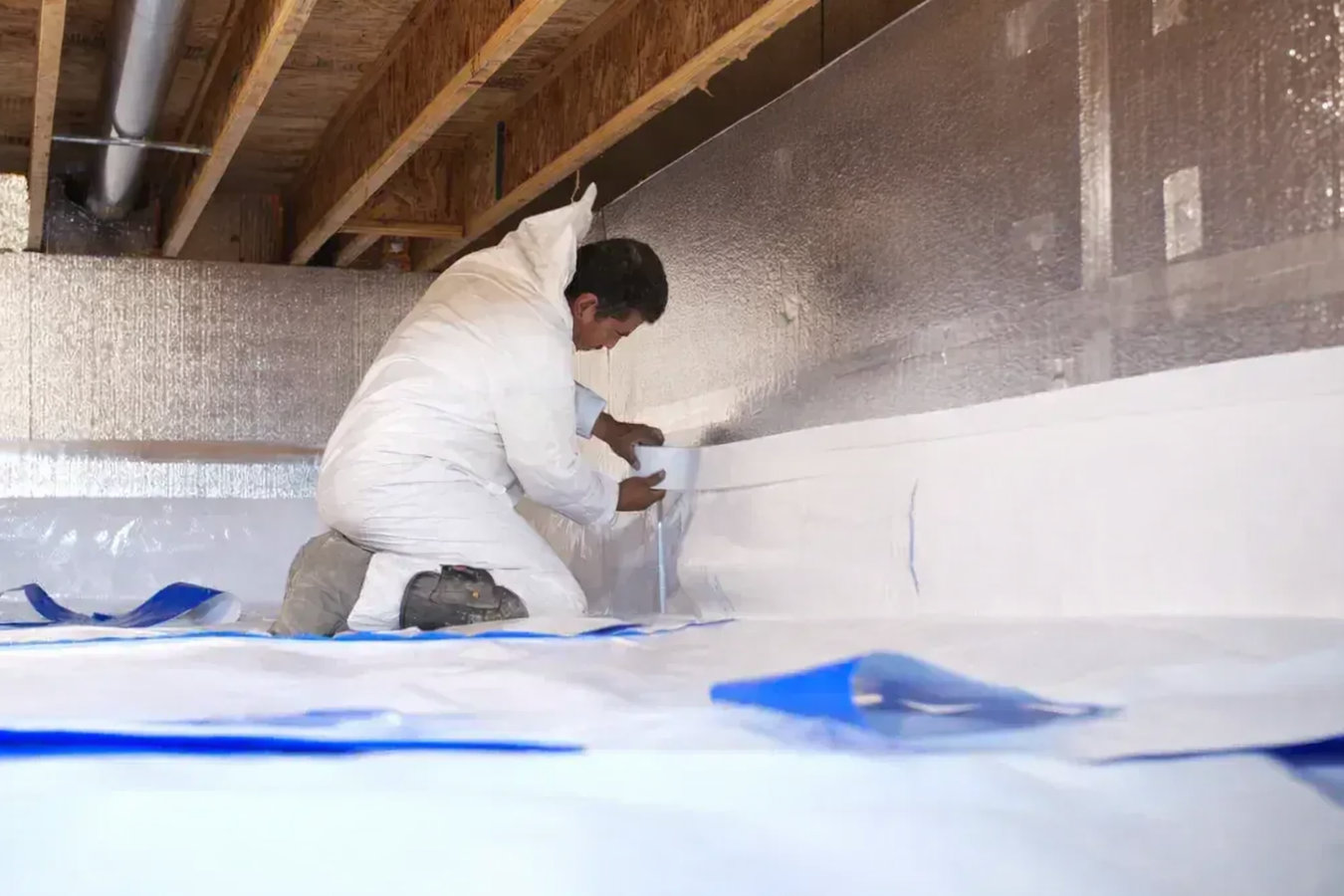
Vapor barrier installation in Lynwood means laying a sheet of heavy-duty plastic across the ground of your crawl space - seams overlapped and taped, edges secured to the foundation walls - so moisture rising from the soil cannot reach your floor joists, insulation, or living space. Most single-family home installations are completed in one to two days with no need to leave your home.
Lynwood's older housing stock and clay-heavy soils make this service especially important here. Most homes built before 1980 were constructed without any moisture protection in the crawl space - and with the Los Angeles rainy season running November through March, those unprotected crawl spaces absorb significant moisture every single year. If your home has a persistent musty smell or allergy symptoms that seem worse indoors, ground moisture is often the root cause. You can pair vapor barrier installation with attic air sealing for a whole-home approach to air quality and energy performance.
The EPA provides guidance on how crawl space moisture affects indoor air quality at epa.gov. California's energy efficiency standards for moisture control in residential construction are maintained by the California Energy Commission.
A damp, earthy odor that develops between November and April - when Southern California's rainy season is active - is often coming from moisture rising through an unprotected crawl space. The smell is strongest near the floor and in rooms that sit directly above the crawl space. This is the most common early sign that ground moisture is an active problem.
Wood subfloors that have been absorbing moisture for years gradually lose their stiffness. If you notice spots where the floor flexes or gives slightly when you walk across it, moisture damage to the wood underneath may already be underway. In older Lynwood homes with original hardwood or plywood subfloors, this is worth taking seriously before it becomes a structural repair.
Mold and dust mites thrive in humid crawl spaces, and the air from that space moves upward into your living areas through gaps in the floor. If family members feel noticeably worse at home than at school or work - especially anyone with asthma or respiratory sensitivities - elevated crawl space humidity could be a contributing factor. This is particularly common in Lynwood's older homes where crawl spaces have no moisture protection at all.
Water droplets forming on pipes or metal ductwork under the house mean the humidity level below your home is consistently too high. That same moisture is working against your floors and framing. If you have seen this during a plumbing visit or your own inspection with a flashlight, it is a direct sign that moisture control work is overdue.
We install vapor barriers across the full floor area of crawl spaces, with seams overlapped by at least a foot and sealed with tape, and edges secured to the foundation walls to eliminate any gaps at the perimeter. We use heavy-duty polyethylene sheeting that holds up to foot traffic during future maintenance visits and withstands the persistent moisture cycles that Lynwood's clay soils create year after year. For homes with existing thin or degraded plastic, we remove the old material before installing a proper replacement.
We also provide complete crawl space vapor barrier work as part of broader moisture control projects, including homes that want to address both the barrier and any structural prep at the same time. For homeowners who want to combine moisture control with energy upgrades, we can pair installation with attic air sealing to reduce air leakage throughout the home in a single visit.
Best for homes with bare-dirt crawl spaces that have never had any moisture protection installed.
Best for homes where an older or thin barrier has deteriorated, shifted, or been damaged by pests over the years.
Best for older Lynwood homes with very limited crawl space clearance that require a crew experienced in confined-space work.
Best for homeowners who want to address crawl space moisture and overall home air quality in a single coordinated project.
Most of Lynwood's residential neighborhoods are made up of homes built between the 1940s and 1970s - well before vapor barriers were a standard part of construction. That means a large share of homes here have bare-dirt crawl spaces that have been exposed to ground moisture for their entire existence. Los Angeles County's clay-heavy soils absorb water during the rainy season and release it slowly for months, which means the ground under these homes stays wetter and for longer than most homeowners realize - even during dry stretches in spring and summer.
We serve the full Lynwood area and the neighboring communities where the same conditions apply. Homeowners in Huntington Park and Bell face the same older housing stock, the same clay soils, and the same seasonal moisture cycle as Lynwood. If you are not sure whether your crawl space has any protection at all, the fastest way to find out is a free on-site inspection - and the right time to schedule it is before the rainy season, not after you start smelling something musty.
We ask your address, the approximate size of your home, and whether you have had any moisture problems or previous crawl space work done. We reply within one business day to schedule your free estimate visit.
A technician accesses the crawl space and checks the size, clearance, existing conditions, and whether any prior moisture damage is present. The visit takes 30 to 60 minutes. We explain what we found and what we recommend before we leave.
You receive a written quote showing the scope of work, material thickness, and total cost. This is the right moment to ask questions - how will seams be sealed, does the price include debris removal, and how long will the work take.
The crew lays and seals the barrier across the full floor, securing edges to the foundation walls. Before leaving, we share photos from inside the crawl space so you can see the finished work - no need to crawl under your own home to check.
No sales pitch, no obligation. Written quotes only. We reply within one business day.
(424) 307-8116Every job begins with a free written estimate that spells out the material, the scope, and the total cost before any work starts. You know exactly what you are paying for, and the completed installation is documented so you have a record to keep.
We work regularly in the postwar single-family homes that make up most of Lynwood's residential streets - homes with tight crawl space clearances, decades of accumulated moisture exposure, and crawl spaces that were never designed to be protected. That experience means we know what to look for and what to fix, not just what to install.
We use thicker barrier material suited to Lynwood's persistent seasonal moisture cycle - not the thinnest option available. Seams are overlapped and sealed with tape. Edges are secured to the foundation walls. These are not optional details - they are the difference between a barrier that works and one that shifts and fails within a few years.
Crawl space work is invisible once the hatch is closed. We document the finished installation with photos and share them before we leave so you can see that seams are sealed, edges are secured, and the full floor area is covered. You should not have to take a contractor's word for work you cannot easily inspect yourself.
When the work is in a space you cannot see, documentation and verified credentials matter more than promises. These are the standards we hold ourselves to on every job.
Seal air leaks in the attic to reduce energy loss and improve indoor air quality alongside crawl space moisture control.
Learn MoreHeavy-duty plastic sheeting installed across the crawl space floor to block ground moisture at the source.
Learn MoreEvery rainy season without a barrier is another season of moisture working against your floors - call now for a free inspection before the next one starts.