
Loading...
Serving Lynwood, CA and surrounding areas. (424) 307-8116
Lynwood Insulation provides attic air sealing, blown-in insulation upgrades, spray foam, and retrofit insulation to Bell homeowners whose 1940s-through-1970s stucco homes were built without modern energy efficiency in mind. We have served the Southeast LA area since 2015 and respond within one business day - free on-site estimates with no obligation.
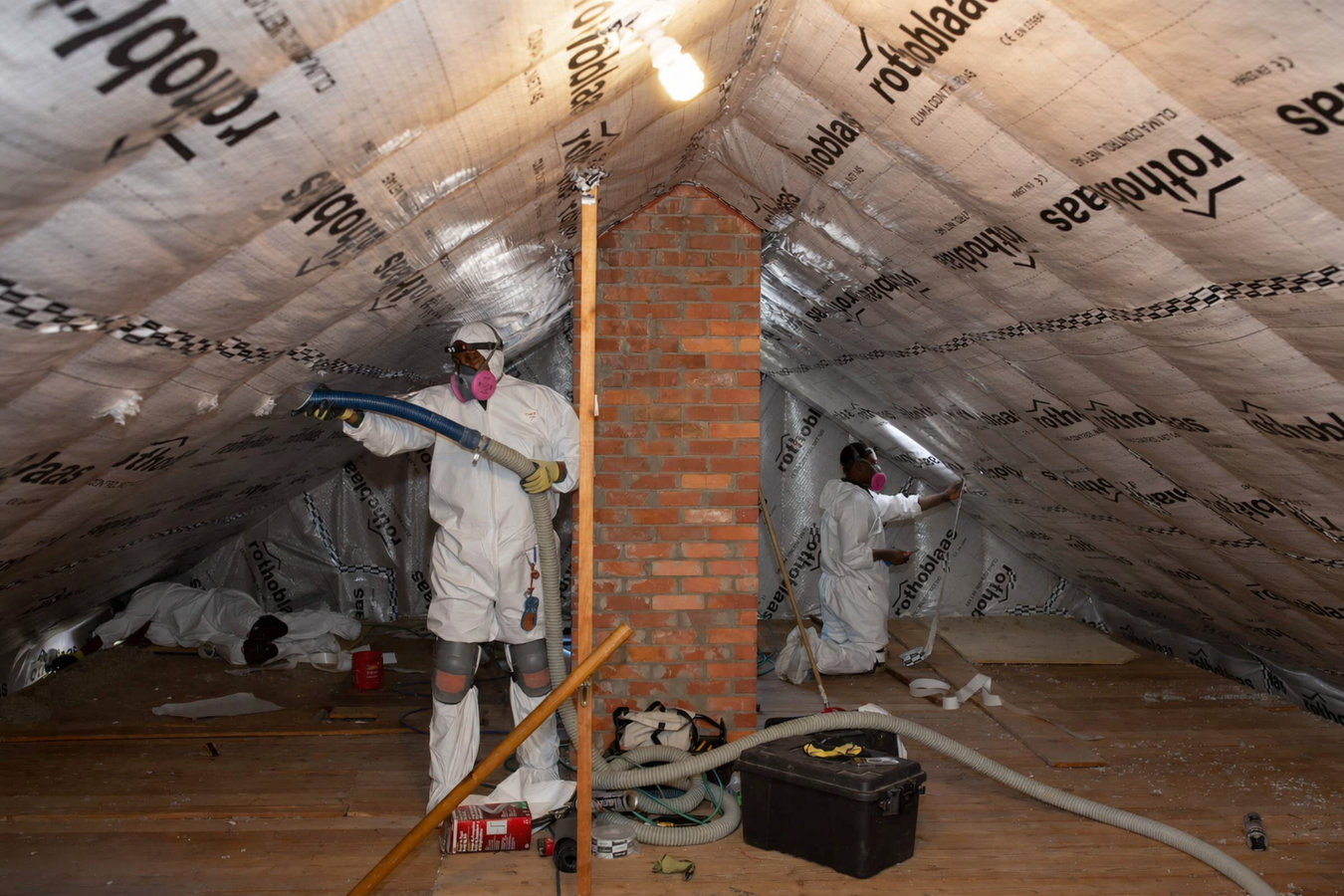
Bell homes built before 1975 routinely have open gaps at the attic floor level - top plate edges, plumbing chases, electrical penetrations, and attic hatches that were never sealed when the home was built. Our attic air sealing service closes those bypasses before any new insulation is installed, so the insulation performs at its full rated value instead of being undermined by uncontrolled airflow from the living space below.
Blown-in loose-fill is the most practical upgrade for Bell attics because it fills around existing joists, ducts, and framing obstructions without requiring demolition of the ceiling below. For the low-clearance attic spaces common in Bell's older stucco homes, blown-in reaches places that batt insulation cannot, bringing the attic floor up to California Title 24 R-38 minimums in a single day.
Bell's flat terrain and clay-heavy soils mean water moves toward foundations rather than away from them, and the seasonal wet-dry cycle creates gaps at slab edges and rim joists over time. Spray foam seals those infiltration points while insulating simultaneously - making it the right material for specific problem areas in Bell homes even when blown-in handles the attic.
Some Bell attics have original insulation from the 1950s and 1960s that has been compressed flat, saturated by an old roof leak, or contaminated by rodent activity over the years. Blowing new material on top of compromised insulation does not solve the underlying problem - we remove and dispose of the old material first so the new insulation starts at full performance from day one.
Bell homes with raised foundations often have underfloor insulation that has fallen from its hangers or was never installed to begin with. Addressing the crawl space stops cold air from the ground from moving freely under the floor and is frequently the reason older Bell homes have floors that feel cold even when the thermostat is set high.
Bell's clay soils hold moisture after the winter rainy season and release it slowly as temperatures rise in spring. In homes with crawl spaces, that ground moisture can migrate upward into floor framing and subfloor without a vapor barrier in place. We install heavy-gauge poly barriers that stop moisture movement at the source, protecting the structure and the insulation above it.
Bell is a small city - just about 2 square miles - but it packs roughly 35,000 residents into that space, making it one of the more densely populated cities in California. Most of the residential construction in Bell happened between the 1940s and the 1970s, which means the housing stock is 50 to 80 years old. These homes were built before California had meaningful energy codes. Wall cavities were left empty. Attic insulation was minimal where it existed at all. And air sealing was not a concept that anyone applied to residential construction in that era. The result is a large number of older stucco homes on small urban lots that work hard against the local climate instead of with it.
Bell's climate is classic Southern California Mediterranean - hot, dry summers with temperatures reaching the mid-90s from June through September, mild winters that still bring concentrated rainfall from November through March. The city sits on flat land in the Los Angeles Basin, which means drainage flows toward streets and foundations rather than away from them. Santa Ana wind events in fall and winter add another seasonal stress, driving hot dry air through any unsealed penetration in the building envelope. The clay-heavy soils under Bell's streets expand when wet and shrink when dry, gradually widening gaps at slab edges and foundation perimeters year after year. The California Energy Commission sets the Title 24 standards that govern insulation R-values for all permitted work in Bell.
Our crew works throughout Bell regularly, and we understand the local conditions that affect insulation work here. Bell's homes are a specific type of job - small stucco houses on urban lots, many with modifications made over the decades by different owners, some with deferred maintenance that has built up quietly over years. A significant share of properties in Bell are rental units or small multi-unit buildings, and those often have more deferred insulation work than owner-occupied homes. Our team approaches every job by documenting what is actually there before recommending anything.
Eastern Avenue is the main commercial corridor that runs through the city, and most Bell residents know it as the street where local businesses and shops line up along the main stretch. The I-710 freeway runs along Bell's eastern edge and the I-5 cuts through nearby, making access to any neighborhood in the city straightforward. Furlong Park - widely known as Bell Park - is a reference point at the center of the residential neighborhoods. For permit-required work, the City of Bell Building and Safety Division handles all residential building permits.
We serve neighboring Huntington Park to the south and South Gate to the east, both of which have similar mid-century housing stock with the same types of air sealing and insulation needs. Working across these adjacent cities means our crew already knows the building types, permit offices, and common problem areas before arriving at your home.
Call us or submit a request through our estimate form and tell us what you are seeing - high bills, rooms that stay hot, drafts near exterior walls, or anything else that has been bothering you. We respond within one business day to schedule a visit.
A technician visits your Bell home, inspects the attic and any crawl space, measures existing R-values, and checks for air bypass locations. The written estimate is itemized and completely free - no charge and no pressure to commit.
Most Bell attic air sealing and blown-in insulation jobs are completed in a single day by a two-person crew. Living areas are protected throughout the work and you do not need to leave your home during the installation.
When the work is complete, we walk you through what was done, where materials were placed, and what R-value the attic now has. All debris is removed from the property and you receive documentation of the completed work for your records.
No cost, no obligation. We come to your Bell home, inspect the attic and any crawl space, measure what is there, and give you a written estimate before you decide anything.
(424) 307-8116Bell is a small, dense city of about 35,000 people located in the southeast part of Los Angeles County, roughly 7 miles south of downtown Los Angeles. It covers only about 2 square miles, making it one of the more compact cities in the region. The I-710 freeway runs along its eastern edge and the I-5 is close by to the north, giving residents easy access to the broader LA freeway network. Bell is a predominantly Latino community with deep neighborhood roots - many families have lived in the area for multiple generations and take real pride in their homes and blocks. More background on the city is available on the Bell, California Wikipedia page.
The housing stock in Bell is mostly small stucco single-family homes and older apartment buildings, the majority built between the 1940s and the 1970s. Many sit on lots of 4,000 to 6,000 square feet with concrete driveways, modest front yards, and small backyards. A significant share of Bell properties are renter-occupied, which can mean insulation and air sealing work has been deferred longer than in owner-occupied neighborhoods. Homeowners in Bell who are looking to improve comfort and lower energy costs often find that an attic air seal combined with a blown-in upgrade delivers noticeable results quickly. Nearby Lynwood and Compton share Bell's mid-century housing character and are also areas where we regularly work.
Seals gaps and delivers superior thermal performance for homes and businesses.
Learn MoreFills irregular spaces quickly with loose-fill insulation for even coverage.
Learn MoreWhole-home insulation solutions that improve comfort and lower energy bills.
Learn MoreSafe removal of old or damaged insulation to prepare for a fresh install.
Learn MoreInsulates beneath your floors to stop moisture and heat loss at the source.
Learn MoreCloses drafts and leaks so your conditioned air stays where it belongs.
Learn MoreProtects basements from cold, moisture, and energy loss with proper insulation.
Learn MoreHigh-density foam that acts as both insulation and a moisture barrier.
Learn MoreLightweight foam that expands to fill cavities and absorb sound effectively.
Learn MoreCommercial-grade insulation for warehouses, offices, and industrial buildings.
Learn MoreBlocks ground moisture from entering your crawl space and damaging your home.
Learn MoreInstalls moisture barriers that protect walls, floors, and structural framing.
Learn MoreSeals attic bypasses to prevent conditioned air from escaping through the roof.
Learn MoreUpgrades insulation in existing homes without major construction or disruption.
Learn MoreOlder Bell homes lose energy through unsealed attic bypasses and aging insulation every day - a free on-site estimate shows you exactly what it would take to fix it. Call us or submit a request and we will get back to you within one business day.